 Rao Habib
Overview of Hydrocarbons and Functional Groups: Acids, Alkanes, Alkenes, and Alcohols
Learn the fundamentals of functional groups and hydrocarbons. This approachable book explains alkanes, alkenes, alcohols, and carboxylic acids with straightforward examples.
Take a look at yourself. Carbon-based molecules make up everything from the hand sanitizer in your purse to the plastic bottle on your desk, the vinegar in your kitchen, and the gasoline in your automobile. Because there are millions of these molecules, organic chemistry might seem daunting at first.
Fortunately, you don’t have to commit millions of chemicals to memory. The majority of organic chemistry can be understood after you grasp hydrocarbons and functional groups. Alkanes, alkenes, alcohols, and carboxylic acids are the four major families covered in this book.
Hydrocarbons: What Are They?
Compounds consisting of just two elements hydrogen and carbon are known as hydrocarbons. That’s all. Nothing, not even nitrogen or oxygen.
Because it can make four bonds and join with other carbon atoms to form rings, branches, and chains, carbon is unique. The richness of carbon chemistry stems from its ability to build long, diverse skeletons.
The main types of hydrocarbons are alkanes, or saturated hydrocarbons, which contain only single bonds. We know Alkenes and Alkynes are unsaturated hydrocarbons with at least a double or triple bond
• Aromatic hydrocarbons have ring structures, such as benzene. I start with alkanes and alkenes, then alcohols and acids.
Alkanes: The Basic, Robust Foundation. We study the most basic hydrocarbons: alkanes. Since there is just one carbon-carbon bond, each carbon may contain as many hydrogen atoms as it can. For this reason, they are called saturated.
The general formula is CnH2n+2
Since they serve as the foundation for all organic nomenclature, it is worthwhile to study the names of the first few alkanes:
Carbons Name Formula: 1 Methane CH4 2 Ethane C2H4 3 Propane C3H8 4 Butane C4H10 5 Pentane C6H12 You’ll notice that each name ends in -ane. You can tell you’re working with an alkane by that suffix.
Important characteristics of alkanes• Non-polar: they combine well with other non-polar materials but do not dissolve in water.
• Low reactivity. Alkanes are comparatively unreactive due to their strong, stable single bonds.
• Boiling point trend.
As molecular size increases, longer chains become liquids and eventually waxy solids, but smaller alkanes, such as methane, have a boiling point of about -162 °C.
Where alkanes are important in everyday life
Natural gas is mostly methane, LPG cylinders are filled with propane and butane, and petrol, diesel, and candle wax contain longer-chain alkanes.
Principal responses
Alkanes have two main functions. They make excellent fuels because they burn (combust), releasing carbon dioxide, water, and a lot of energy. In the presence of UV radiation, they also experience substitution reactions with halogens like chlorine, in which a hydrogen atom is replaced by a halogen atom.
Alkenes: Where Everything Is Changed by the Double Bond
Add a twist now. Alkenes contain at least one carbon-carbon double bond (C=C). They are much more reactive than alkanes because of one key feature.
CnH2n is the general formula for alkenes with a single double bond.
Ethene, propene, butene, and so forth are names that end in -ene. One of the most important compounds in industry, ethylene (C2H4) is the simplest alkene.
Alkenes are called unsaturated because they contain fewer hydrogen atoms than the corresponding alkane. Other molecules are drawn to the double bond because it has a high electron density.
Important alkenes’ reactions
Most additional reactions alkenes undergo involve the double bond opening and additional atoms adding to the carbons. Typical instances consist of:
• Hydrogenation: the process of creating an alkane by adding hydrogen (used to harden vegetable oils into margarine).
• Halogenation: the addition of chlorine or bromine
• Hydration: forming alcohol by adding water
• Polymerization: the process by which thousands of tiny alkene molecules are joined to form lengthy chains, such as ethene becoming polythene.
A basic laboratory test
Do you want to distinguish between an alkane and an alkene? Add the orange-brown bromine water. Because bromine adds across the double bond, the color rapidly fades if the sample is an alkene. Under typical circumstances, an alkane won’t decolorize it. Keep in mind that this is one of your favorite exam questions.
Functional Groups: What Are They?
This is the structure of organic chemistry. A functional group is a particular atom or set of atoms that determines a molecule’s chemical behavior.
Consider a hydrocarbon chain as a molecule’s body and its functional group as its personality. Even with the same carbon backbone, two molecules with different functional groups can behave very differently. Ethanol, which has a -OH group, is a liquid that can be consumed (in drinks), burned as fuel, or used as a disinfectant, while ethane is a gas that seldom reacts.
Alkenes react quite differently from alkanes because, interestingly, the C=C double bond in alkenes also qualifies as a functional group.
Now let’s examine two oxygen-containing functional groups.
The Hydroxyl Group (–OH) in Alcohols
The hydroxyl group (-OH) is joined to a carbon chain in alcohols. Methanol, ethanol, and propanol end in -ol.
General formula: CnH2n+1OH
The significance of the –OH group
Hydrogen bonds can be formed via the polar –OH group. This has significant consequences:• Compared to alkanes of comparable size, alcohols have higher boiling points. While ethane boils at around −89 °C, ethanol boils at about 78 °C.
• Water readily dissolves small alcohols such as ethanol and methanol.
Regular uses. We study that ethanol may be found in solvents, alcoholic beverages, hand sanitizers, and biofuel.
• Methanol. A hazardous substance that should never be ingested; it is utilized in industry as a fuel and solvent.
• Glycerol. A kind of alcohol used in medications and cosmetics
How ethanol is produced
When yeast ferments glucose to generate ethanol and carbon dioxide, this is one method of producing ethanol. It may also be produced industrially by hydrating ethene with steam and a catalyst, which neatly connects to alkenes.
Significant responses
Alcohols can be oxidized and burn cleanly. For example, ethanol can oxidize to an aldehyde first, followed by ethanoic acid, which brings us to our last family.
The Sour Side of Organic Chemistry. Carboxylic Acids
The carboxyl group (-COOH) is present in carboxylic acids. The names methanoic acid, ethanoic acid, and propanoic acid all finish in -oic acid.
Well-known examples.
• The sharp-smelling ingredient in vinegar is ethanoic acid, sometimes known as acetic acid.
• Methanoic acid, also known as formic acid, is what causes ant bites to sting.
• Citric acid, which is a more complicated acid with three carboxyl groups, is present in oranges and lemons.
Properties and reactions
Weak acids are carboxylic acids. Unlike strong acids like hydrochloric acid, they only partially ionize in water. Nevertheless, they exhibit classic acid behavior.
• They produce hydrogen gas when they react with metals.
• The reason vinegar mixes with baking soda is that they react with carbonates to form carbon dioxide.
• They produce water and salts when they react with bases.
Esterification is one very helpful reaction. An ester and water are produced when a carboxylic acid interacts with an alcohol (using an acid catalyst). Many fruity scents found in food flavorings and fragrances are caused by esters.
Family Functional Group Quick Comparison
Alkanes with C–C single bonds as an example of a suffix-ane Ethane Alkenes C=C double bond
-ene Ethene Alkenes C=C double bond
-ol Ethanol Carboxylic Acids -COOH
-oic acid
Acid ethanol
The Relationships Between These Families
The way everything fits together is one of the most fulfilling aspects of organic chemistry. Using only the chemicals from this page, you may follow a tidy chain of conversions:
Ethanol → Ethanoic acid → Ethene
Ethene converts to ethanol by hydration, and ethanol converts to ethanoic acid by oxidation. You get an ester by adding additional ethanol. One family is easier to understand than another.
Study Advice for Students
1. First, learn the names of the first 10 alkanes. They help as the basis for all names.
2. Then pay attention to functional groupings rather than specific chemicals. You are familiar with the behavior of most alcohols if you understand that of -OH.
3. Frequently sketch structures.
Making sketches of molecules increases comprehension more quickly than going over notes again.
4. Make a connection between chemistry and reality
Facts are easier to recall when you associate ethanoic acid with vinegar or ethene with plastic.
Common Questions
What distinguishes unsaturated hydrocarbons from saturated ones?
Alkanes, or saturated hydrocarbons, only contain single bonds. Alkenes and alkynes are unsaturated hydrocarbons that have at least one double or triple bond.
What makes alkenes more reactive than alkanes?
Alkanes have strong, stable single bonds, but the C=C double bond has a region of high electron density that readily participates in addition reactions.
Are carboxylic acids powerful acids?
No. Because they only partially ionize in water and are weak acids.
What is a functional group?
A functional group is the part of a molecule that defines its unique chemical properties.
Conclusion
We conclude that the fundamental components of organic chemistry are hydrocarbons and functional groups. Alcohols provide polarity and adaptability, carboxylic acids contribute acidity and the ability to form esters, alkanes provide stable fuels, and alkenes open the door to polymers and many reactions. Start with these four families, and you will have a good basis for everything that comes after, from esters and polymers to biology
Keywords:
hydrocarbons, functional groups, alkanes, alkenes, alcohols, carboxylic acids, and basics of organic chemistry.

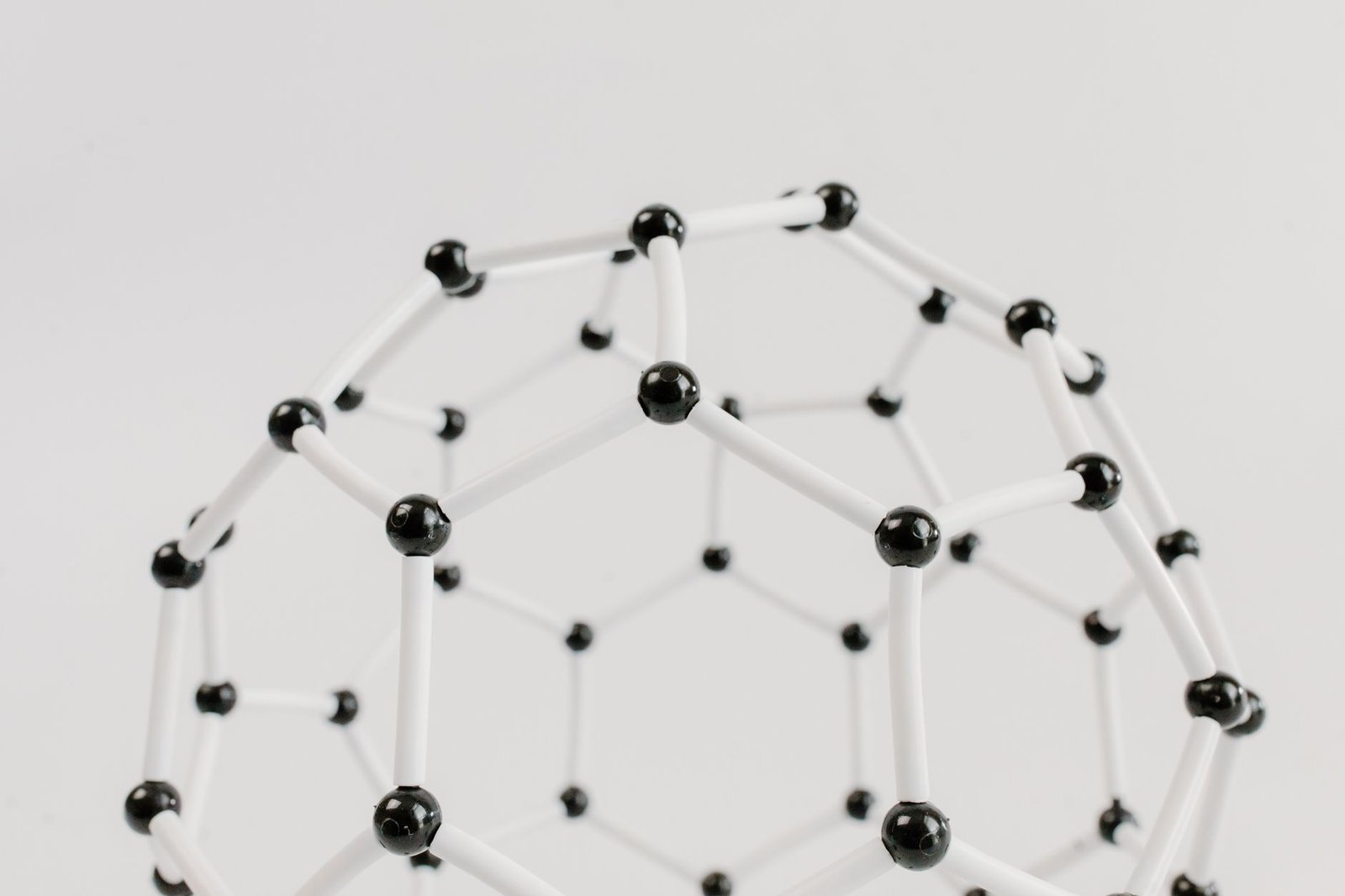
Wonderful work. Just thinking could it be ok to include illustrative diagrams and or images?
Thanks to like 👍 my work